solutions

Make the right architecture decisions, then carry them through to business outcomes

From high-stakes system decisions to daily builds and long-term alignment
Dashboard showing data platform evolution plan with investment, benefits, ROI, and project titles listed.
User interface showing blueprint generation with architecture recommendations and designs listed with ROI and status.
Cloud infrastructure diagram showing AWS components with six listed changes in us-west-2c group.
View from a boat's bow on wavy sea with distant mountains and a cloudy sky at sunrise or sunset.

Three outcomes, powered by the same decision system

Optimize Your Architecture

Make the right high-stakes system decisions
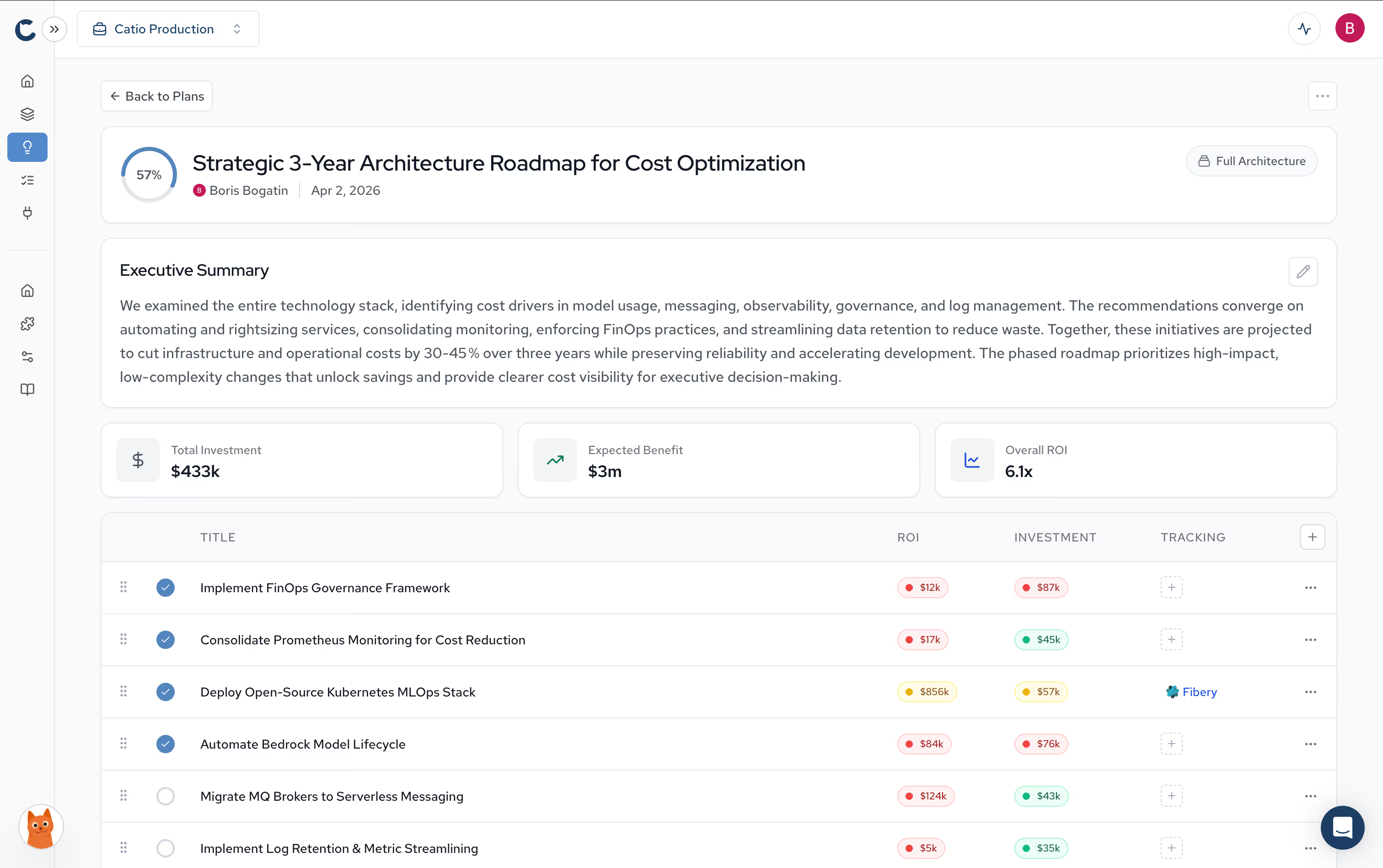
From fragmented understanding to decisions you can commit to
Dashboard showing a 3-year architecture roadmap for cost optimization with investments, ROI, and project tasks.
Watercolor painting of a river flowing through a pine forest with mountain peaks in the background.
Chat icon
When to use
When you need to decide what to change, before committing time and cost
Chat icon
What you get
  • Modernization plans with explicit trade-offs
  • Cost optimization through re-architecture
  • M&A integration and system consolidation
  • Stack rationalization and simplification
Build to aligned specs

Keep teams shipping at AI speed — without architecture becoming the bottleneck

Generate system-aligned specs automatically at AI speed.
Teams build and ship to them, in their existing Coding IDEs.
Architects focus on exceptions instead of every implementation detail.
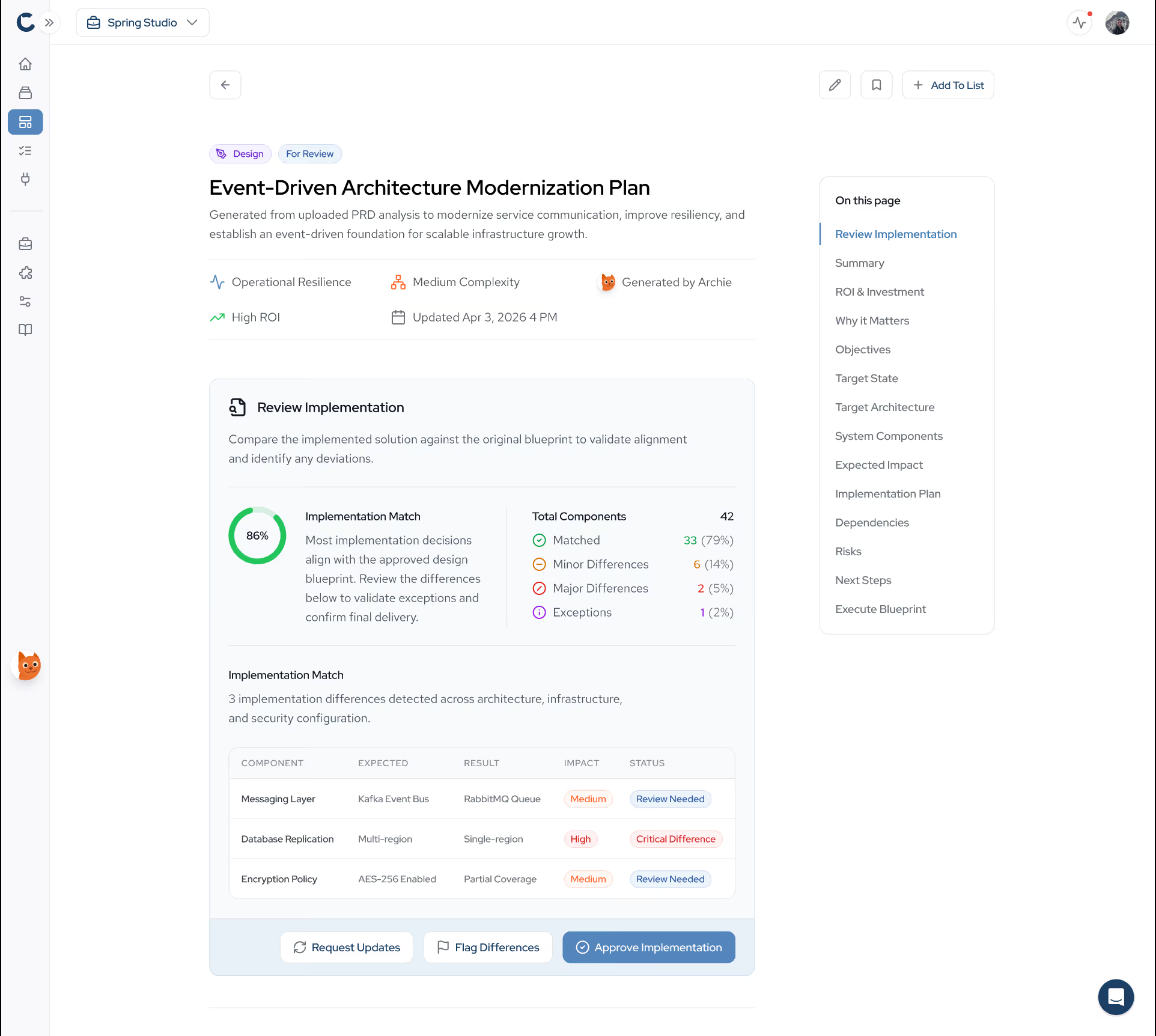
Dashboard showing event-driven architecture plan with implementation review and component differences.
Watercolor painting of a river flowing through a pine forest with mountain peaks in the background.
Chat icon
When to use
When teams need to move fast, without breaking the system
Chat icon
What you get
  • System-aligned specs generated automatically at AI speed
  • Execution-ready designs teams and coding AI can build from immidiately
  • Exception-based reviews by your trusted architects instead of capacity bottlenecks
  • Continuous alignment between system intent, implementation, and architecture governance
Ensure It Compounds

Keep your system improving — not drifting

Architecture decisions persist as system context.
So AI-speed implementation compounds architectural intent instead of eroding it.
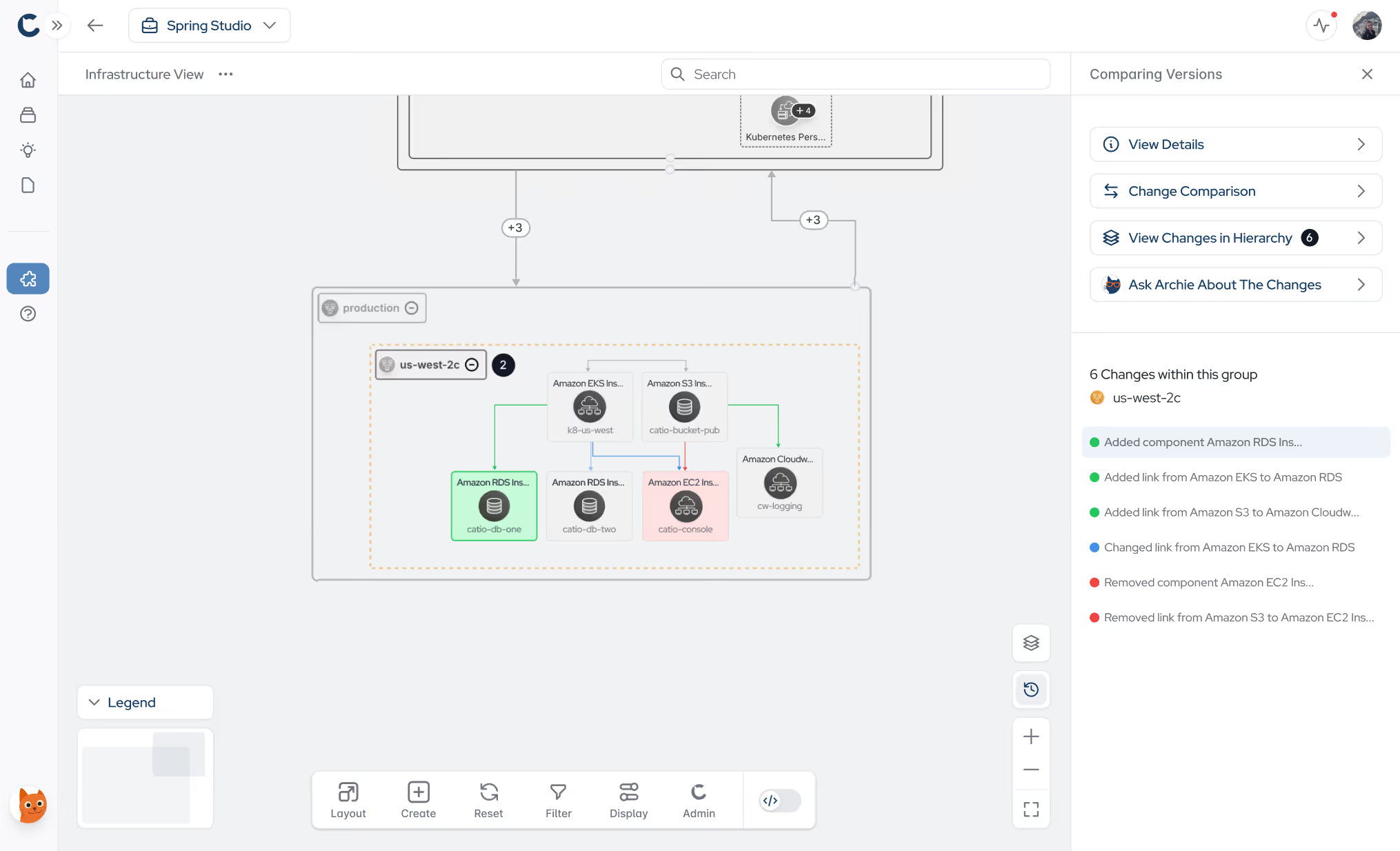
Cloud infrastructure diagram showing Amazon RDS, EKS, S3, EC2, and Cloudwatch components with change highlights.
Watercolor painting of a river flowing through a pine forest with mountain peaks in the background.
Chat icon
When to use
When rapid development causes alignment to start breaking down
Chat icon
What you get
  • Early detection of architectural drift across systems and teams
  • Continuous alignment through exception-based governance
  • Persistent architecture memory that survives org and code change
  • AI-speed development which compounds the system, instead of fragmenting it

AI made execution fast. Catio compounds it.

Teams ship faster than ever.
And now decisions, specs, and execution stay continuously aligned.
Arrow down right icon
01
understand
See your system as it actually runs

Right Icon
02
Decide
Evaluate ROI-backed, system-level trade-offs
Right Icon
03
Design
Generate exeuction-ready specs aligned to intent
Right Icon
04
Execute
Teams use Coding AI to ship safely at AI speed
Right Icon
05
Compound
Govern by exception to align the system as it evolves
Arrow up right icon
proof

What changes in practice

BEFORE
AI accelerated delivery. Arcitecture became the bottleneck.
Fragmented context, manual reviews, and architectural drift at scale.
AFTER
Teams ship at AI speed. Aligned to system intent.
Decision-grade architecture, exception-based governance, and continuously aligned execution.
In production enterprise environments
Dot Icon
Real-time system understanding grounded in what’s running
Dot Icon
AI-generated specs with explicit trade-offs and decision paths
Dot Icon
Architects review exceptions instead of every design detail
Dot Icon
Continuous alignment between decisions, code, and evolving systems
FAQ

Still evaluating?

Answers to more common questions before getting started
How does Catio connect to our systems?

Catio integrates with your existing code, cloud, and observability systems to build a real-time model of your architecture, so it's grounded in what’s actually running, not just documentation.

What does onboarding actually involve?

You connect key systems and context, and then set-up an initial workspace scope. From there, you start with a first decision or initiative, and Catio guides your system understanding, equips you with plans and designs, and lets you carry those through aligned execution.

Who uses Catio and how does that guide development?

Architects, engineering leads, and platform teams use Catio to define and guide decisions. Developer and infra teams continue building in their existing tools, with decisions and designs flowing in to guide execution.

How is this different from architecture docs or tools?

Docs describe systems after the fact, and go stale the moment they are written. Catio helps you make decisions before and during change, with trade-offs, system context, and execution-ready outputs, and then keeps your system understanding up to date.

Have an architecture decision to work through? ↓

Start a real architecture decision

Thank you! Your submission has been received!
Oops! Something went wrong while submitting the form.
Run this on your system