October 29, 2026
The Architecture Knowledge Base: how Catio builds the right things, at AI speed

Kunal Maiti
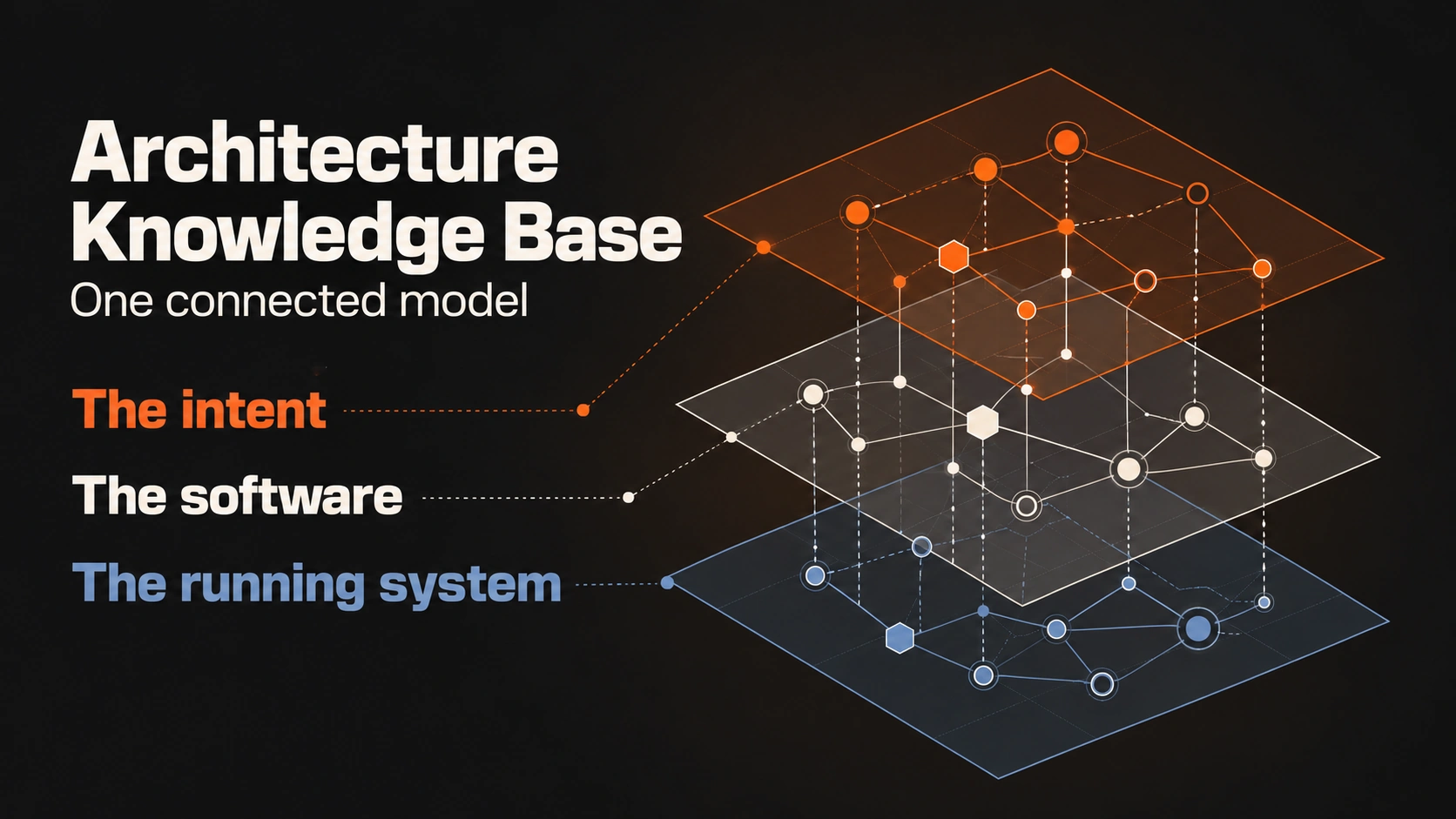
Every engineering organization holds its operating reality in three places that never meet. The intent (what the business is trying to achieve, the standards the architects have set, the trade-offs already settled) lives in strategy documents and in people's heads. The software (the services, components, and the specs that shaped them) lives in repositories. The running system (the cloud estate, the network paths, the cost and the load) lives in the consoles and the logs.
Each tool sees one of the three. Nobody, human or AI, reasons over all of them at once. So a coding agent proposes a clean service that violates a platform standard; a cost review trims infrastructure a revenue-critical flow depends on; and a modernization plan is written against a stale diagram. The decisions are locally sound and system-blind.

Catio's Architecture Knowledge Base (AKB) ties the three together in one living, evidence-backed model, providing the foundation for Catio's Architecture Control Plane and for everything human and agentic teams code and run. Not as an inventory of records from different systems, but as a knowledge graph that captures their relationships and provides context to guide modernization plans and new feature development. AKB informs every decision with intent, software context, and the system as it runs, so teams and agents can build the right things at AI speed, not just build quickly.
What AKB ties together
The intent: business objectives, requirements, architectural standards, and constraints, entered as first-class context rather than left in a slide deck.
The software: the services and components behind the infrastructure, connected to the environments they run in, with the designs and specs that produced them.
The running system: what actually exists, how components communicate, what depends on what, and how it has changed over time—collected continuously, not drawn once.
Catio builds the model through two activities: Collect and Connect.
Collect: evidence, not diagrams
AKB gathers system truth from three sources:
- Read-only cloud integrations discover infrastructure resources and configurations.
- Network flow logs reveal which services actually communicate, including relationships missing from every diagram.
- Source-code analysis connects software components to their runtime environments. Catio's GitHub integration analyzes code without storing it.
Every input becomes an evidence-backed architectural fact. When flow logs show two services talking that no diagram documents, AKB records the relationship with its source, when it was observed, and a confidence level, so engineers can examine the evidence behind anything incomplete, conflicting, or stale. As new evidence lands, the model updates: dependencies no longer seen are flagged, new ones surface, drift becomes visible. Discovery that typically takes weeks of meetings and documentation archaeology takes hours.
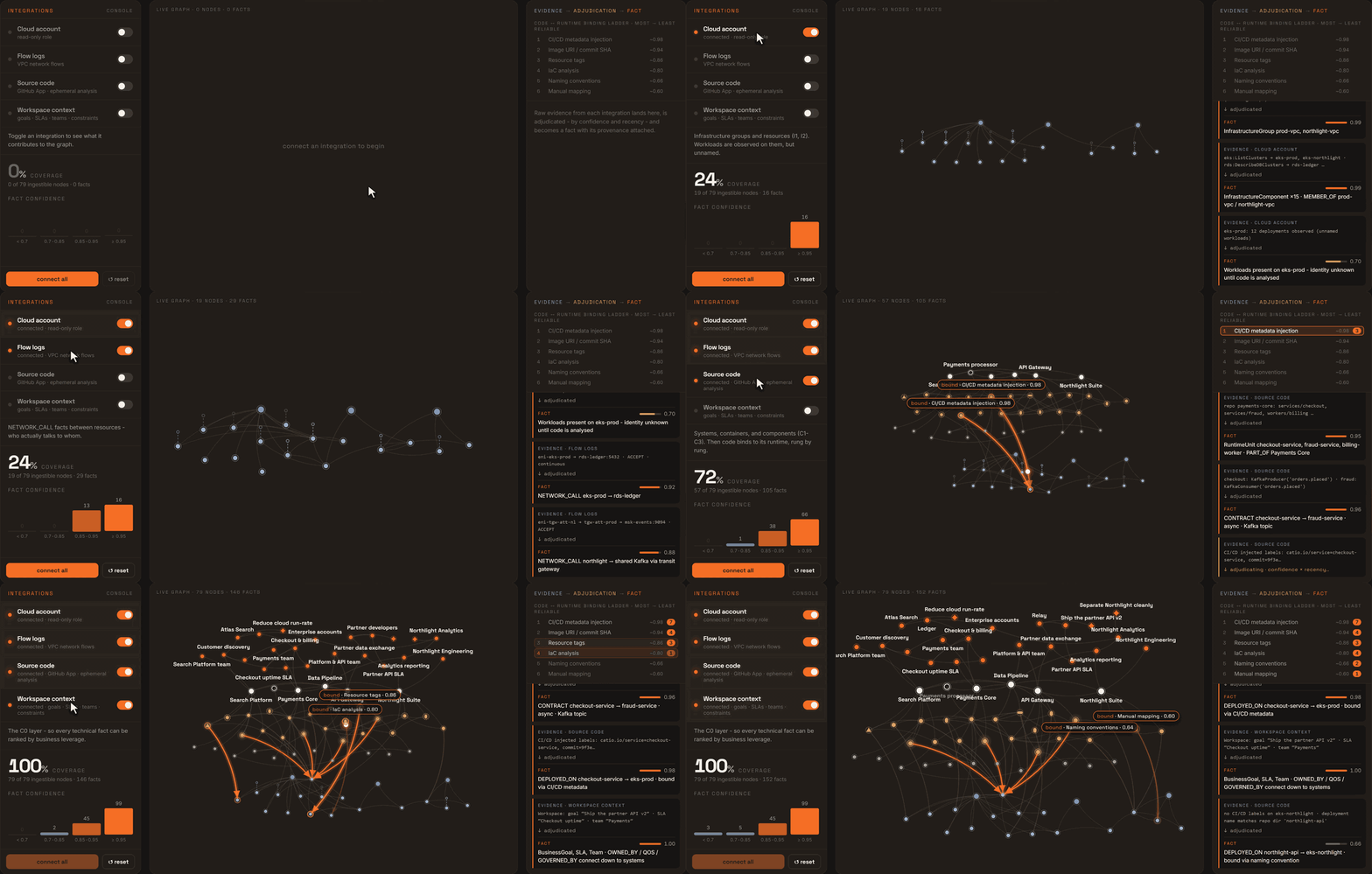
Intent enters the same model through workspace context: objectives, standards, and constraints the organization provides and keeps current. This is the half most tools skip, and it is what lets AKB answer "should we" and not only "what is."
Connect: the semantic layer
Collect establishes the facts. Connect makes sense of how they relate. A continuously evolving knowledge graph links infrastructure to applications, applications to business processes, processes to the commitments they support, and all of it to the objectives and standards it must satisfy. Each link carries evidence and meaning: not merely that two things are connected, but how they interface, what they depend on, and which business objectives that dependency serves.
This is what the best principal engineers hold in their heads—a pre-reasoned model of how the pieces fit, where the gaps are, and what would move the system forward. That model lets them reason quickly and effectively through complex problems.
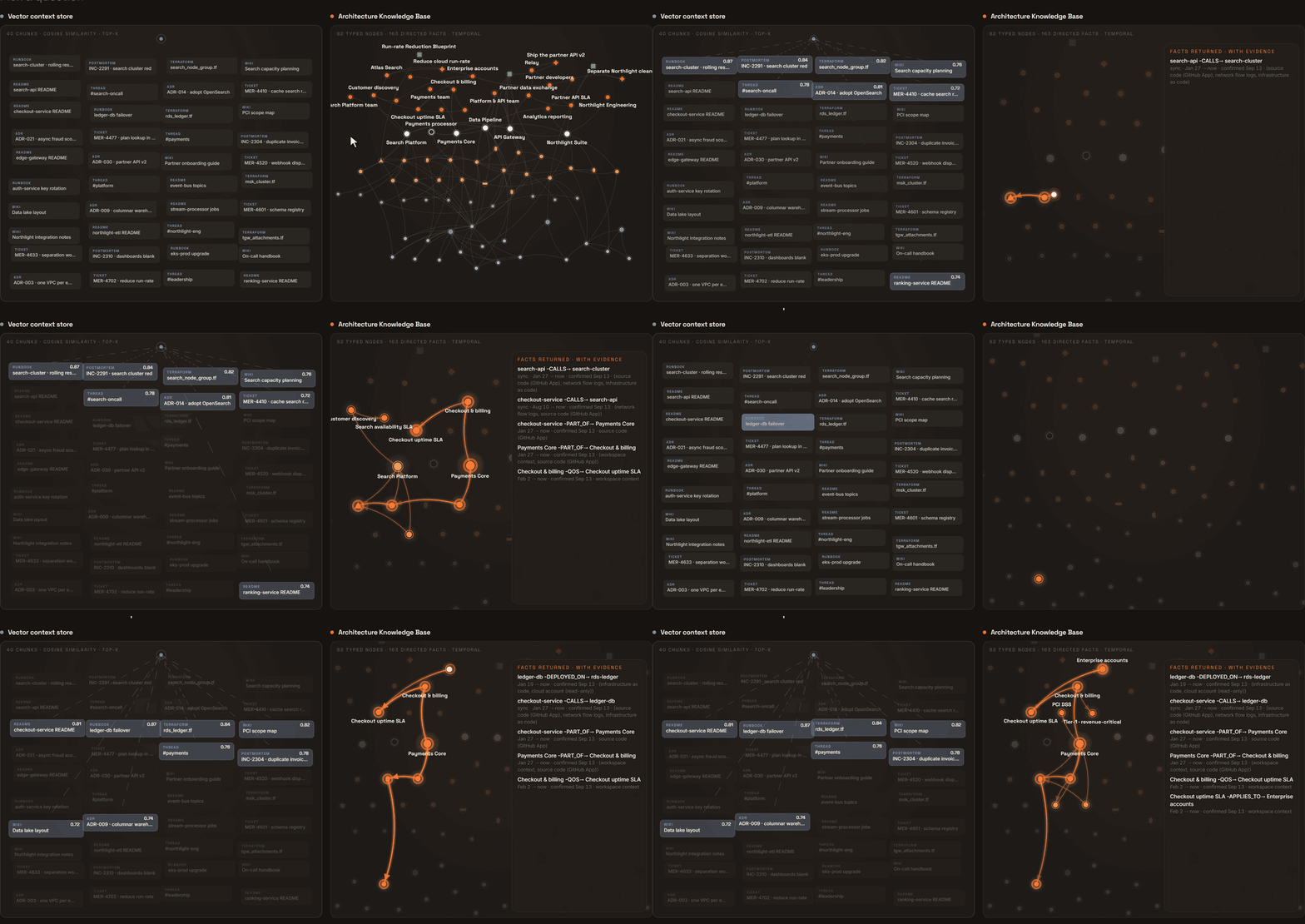
AKB builds that same understanding, across the whole estate, for everyone and every agent, before any question is asked. Where document search retrieves what is written about a service, AKB connects that service to its dependencies. A change can be traced to the business processes, commitments, and objectives it touches without anyone having to reconstruct the chain by hand. A plan or a feature starts from an understanding of the system rather than from a scavenger hunt through it.
What the whole equation unlocks
Archie, Catio's AI architecture team, brings specialized reasoning agents to each question, drawing on AKB's understanding of intent, software, and the running system. Because the understanding exists before the question does, answering is much easier, since the question spans the full architecture lifecycle, not just a single change.
Modernize it
Ask how to modernize the data platform, or where to cut 10% from the infrastructure run-rate, and the answer isn't a generic list of best practices. Drawing on AKB's connected understanding of business objectives, architectural standards, and the live system, Archie establishes the right target architecture, measures the gap from the running system, and ranks the moves by return against investment. A $5B+ enterprise optimizing a large eight-figure AWS estate gets a plan the CFO can fund and the architects can stand behind, in hours rather than quarters. Every figure is traceable to its source.

Catio has helped inform work across eight- and nine-figure technology estates, including opportunities to reduce infrastructure costs by 10% or more and multimillion-dollar modernization initiatives, divestitures, M&A opportunities, and on-premises-to-cloud migrations.
Build on it, so every pull request compounds it
A growing software company adds an AI customer support feature. Its coding agent can see the application code, but not the broader services, standards, and business requirements beyond that repository. The resulting feature may fail to account for the needs of customers across different business units, duplicate existing services instead of leveraging negotiated vendor discounts, or build a separate AI agent infrastructure instead of using the company's existing platform designed to scale agentic services. The feature ships, but fails to deliver its intended business value, drives up costs, and may need to be rebuilt within two years.
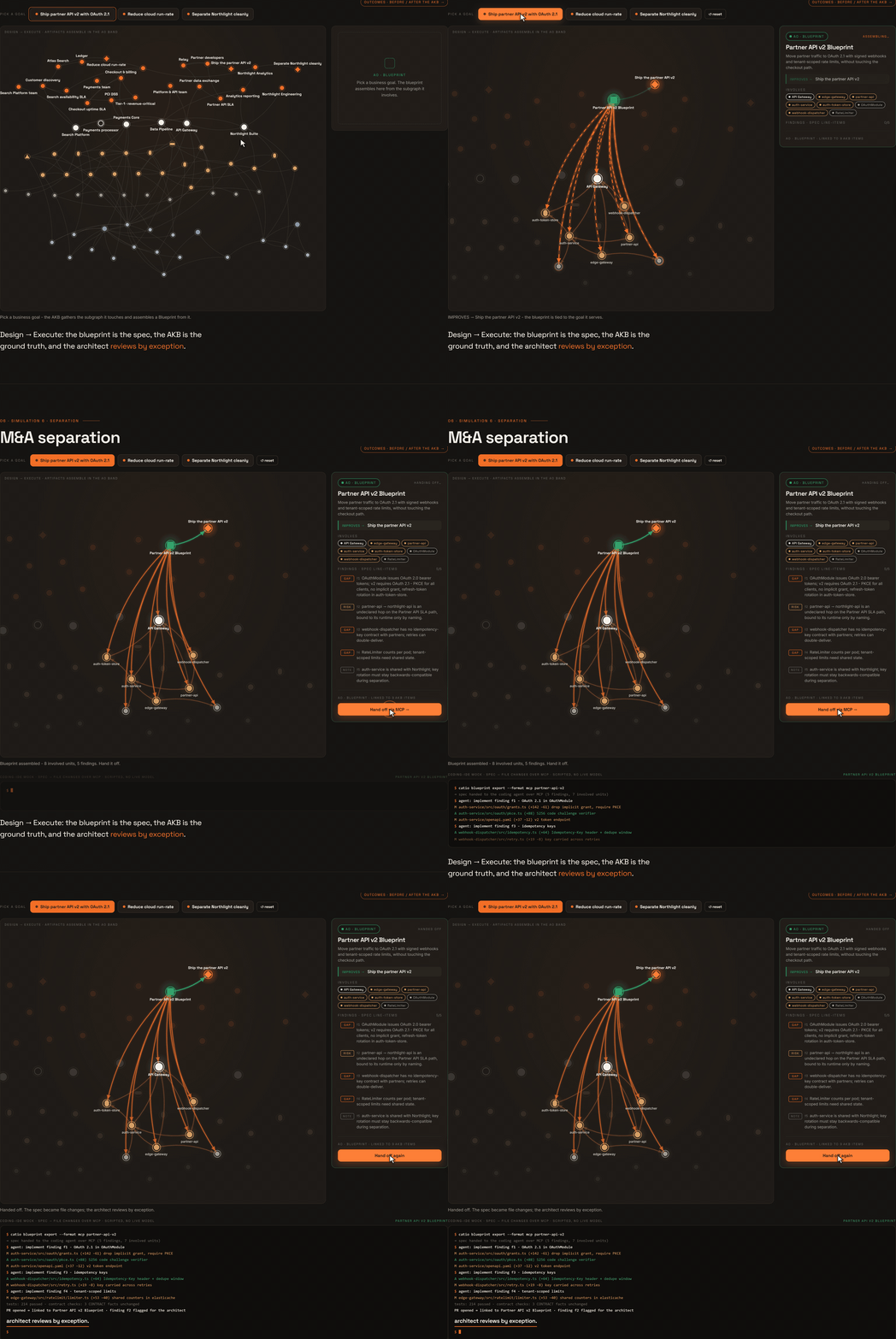
With AKB, teams design the feature to align with the system and the intent: which services it touches, which standards apply, which constraints bound it, and what the target architecture is. Catio can generate multiple execution-ready specs a day instead of roughly one reviewed design a week. Developers and coding agents ship to those specs, pulling them into their tools over MCP, and architects review the exceptions rather than every change.
Each shipped PR moves the architecture toward the target, not away from it. That is how a compounding software system affects the outcomes versus one that drifts.
Evaluate how it is progressing
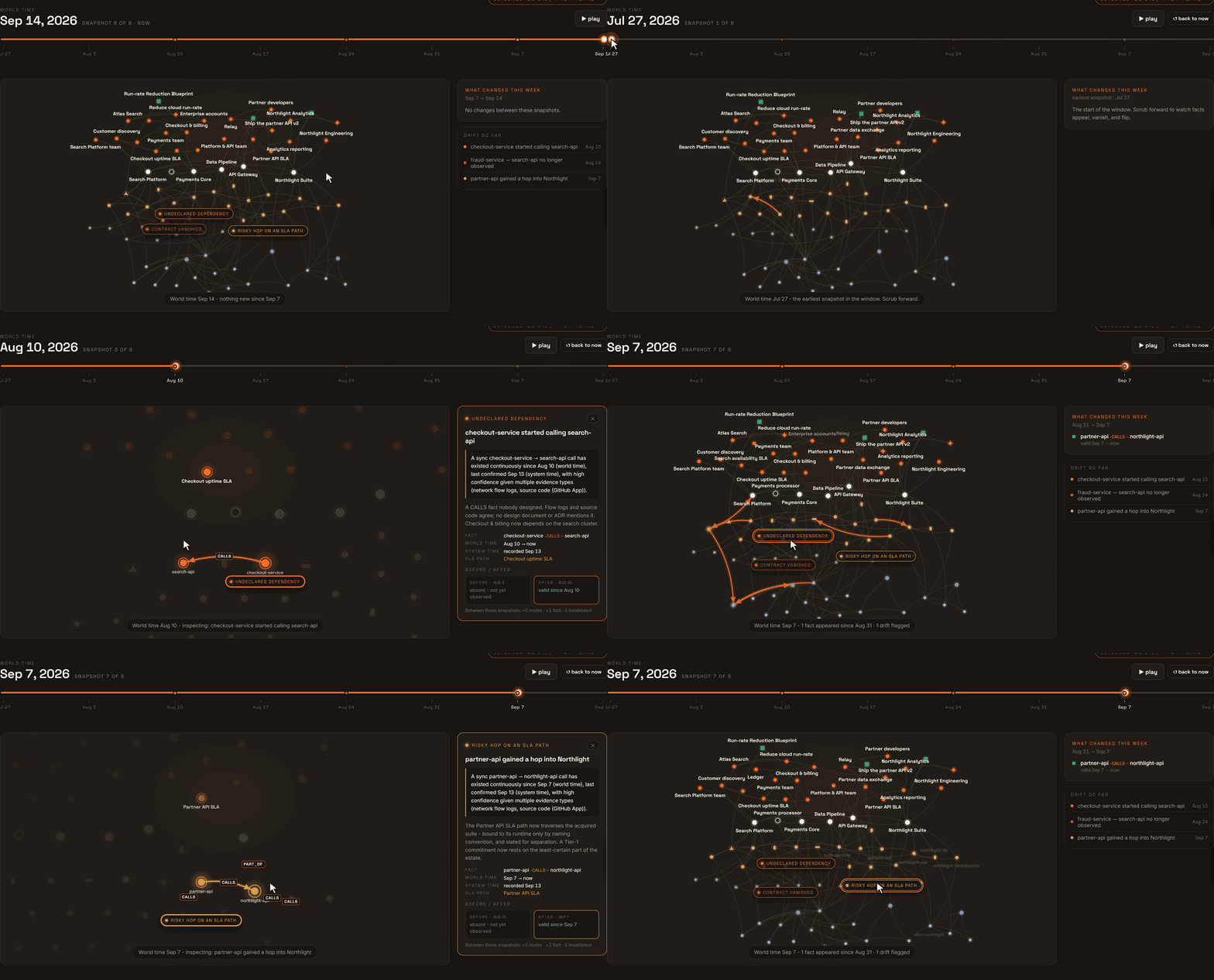
Because AKB refreshes as the system changes, progress is measurable rather than asserted. Did the Kubernetes migration actually finish, or are nine services still in the old environment? Is the gap to the target architecture closing? Is the cost plan tracking? Did the feature that shipped last week land on the spec, or around it? The same model that informed the decision shows whether it is being realized.
Learn from how it is progressing
Decisions, findings, and specs persist in AKB as context attached to the system they shaped. Each analysis builds on previous decisions instead of starting from scratch. When a team revisits a plan they can refine earlier recommendations. Identifying the gap between what was specified and what was built helps teams sharpen their standards. The organization's architectural judgment accumulates in the model instead of walking out the door when people leave.

And the byproduct: alignment before release
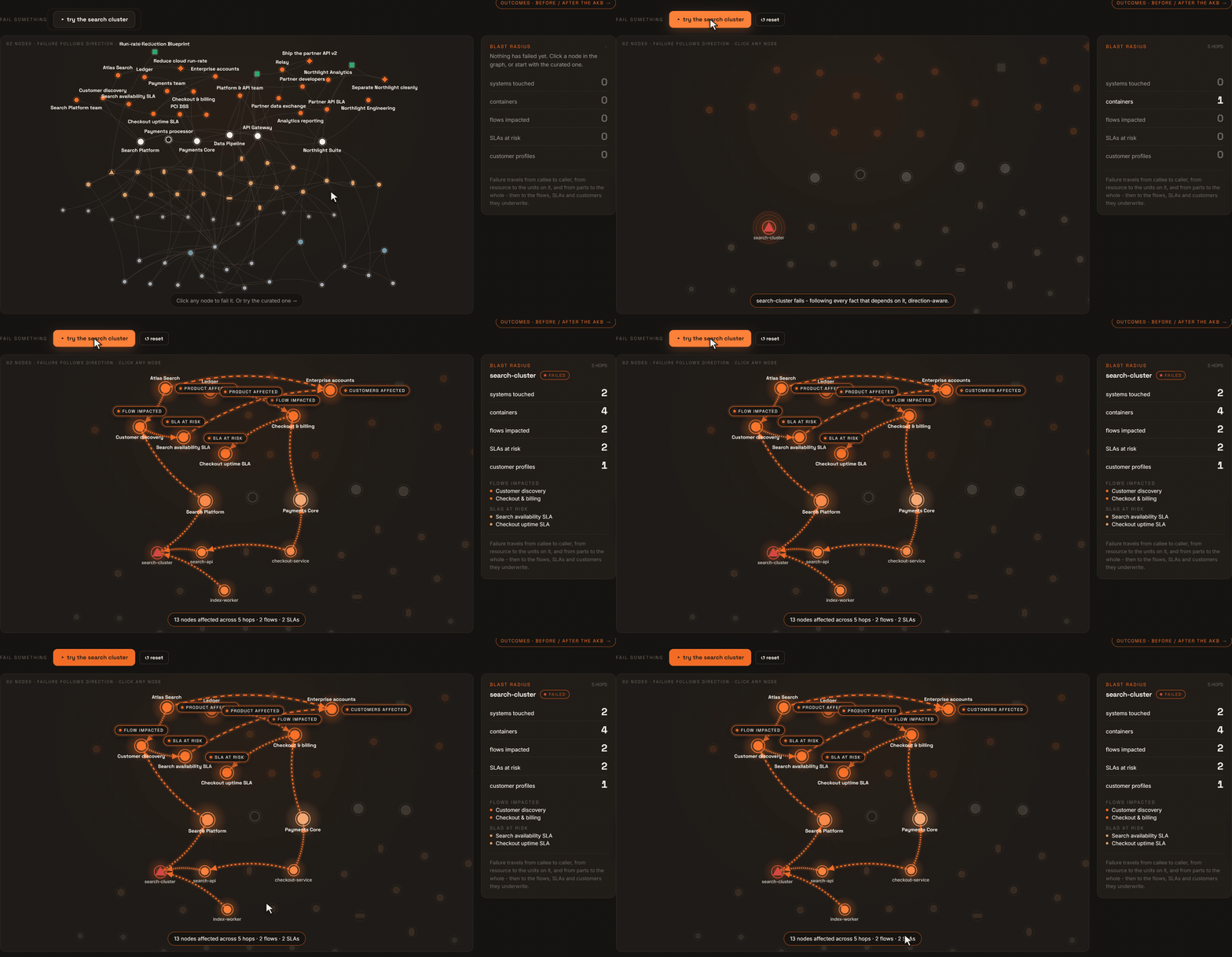
With AKB, teams can validate that changes align with business objectives, meet architectural standards, and optimize the system as a whole before they ship. A retailer preparing for its most valuable shopping day of the year can be assured of how a change affects search, checkout, and billing, and remediate any gaps and risks before the release. The work happens while there is still time to improve the design, not during an incident impacting revenue on a critical day of the year.
Closer to the pace of development
Software delivery got faster than the understanding behind it. AKB closes that gap by holding intent, software, and running system in one model, so modernization is planned against the real system, features are built to it, progress is measured on it, and the lessons stay in it. Each decision informs the next.

AKB is the living record inside the Architecture IDE, the layer above software development and the running system that guides and governs what gets built. Walk through the AKB walkthrough video, or bring a real architecture decision and see AKB run on your own system: book a demo.
FAQs
What is an Architecture Knowledge Base (AKB)?
An Architecture Knowledge Base is a connected, evidence-backed model of an organization's software architecture that ties business intent to the software to the running system, and semantically understands how they interface, the way a principal engineer does. Unlike static diagrams or documentation, Catio's AKB is built from evidence collected from running systems and updates as new evidence arrives, giving engineers and AI a current, well-grounded foundation for architectural decisions.
Is the Architecture Knowledge Base part of Catio's platform?
Yes. AKB is the foundational record of the Catio platform. Archie, Catio's AI architecture team, reasons over it to answer architectural questions and evaluate changes in the context of your actual systems and objectives. Blueprints use the same context to produce designs, recommendations, and plans that guide implementation. And so do developers and agents, right from the coding tools they are most accustomed to, to make the best decisions.
How does Catio keep architectural knowledge up to date?
AKB collects and verifies evidence continuously through read-only integrations with cloud environments, network flow logs, and source-code analysis (code is analyzed, never stored). Each fact records its source, when it was observed, and a confidence level; when sources conflict, recency and confidence decide. Dependencies no longer observed are flagged and new ones surfaced at the next scan. Business objectives, standards, and constraints come from workspace context the team provides and updates.

How does AKB help teams deliver better software?
It lets teams reason over intent, software, and running system together: modernization and cost plans are scored against the organization's objectives and grounded in the real estate; every PRD becomes a spec aligned to the system and the standards that developers and coding agents ship to; progress against the target is measurable; and decisions persist as context for the next one. Because the record is live, teams also see the impact of a change before they make it, including relationships no one documented. The result: faster decisions, fewer re-architecture cycles, and more predictable delivery, aligned to business priorities.
Share this Post