May 27, 2026
Digital Twin Architecture: A Guide for Software Systems

Search "digital twin architecture" and the first page of Google reads like an industrial conference brochure: factories, smart buildings, IoT sensors, NVIDIA Omniverse, Autodesk BIM. The pictures are great. They are also, for most enterprise software teams, the wrong reference architecture.
One of the fastest-emerging applications of digital twin technology in 2026 is not on a factory floor. It is the software system itself: a live, queryable digital model of your codebase, infrastructure, dependencies, costs, and decisions, kept in sync with production. Gartner's Digital Twin of an Organization is the broader enterprise version of the idea; a software system or architecture digital twin applies the same pattern specifically to the technology estate.
This guide covers the canonical definition, the three domains, the reference digital twin architecture, the use cases that justify creating digital twins for software, and how AI agents are reshaping what digital twins can do.
What Is Digital Twin Architecture?
A digital twin architecture is the set of components, data flows, and reasoning layers that keep a live virtual model synchronized with its physical counterpart or other real-world entity. The same shape recurs across most digital twin technology stacks, regardless of domain. The Digital Twin Consortium's canonical 2020 definition: a digital twin is "an integrated data-driven virtual representation of real-world entities and processes, with synchronized interaction at a specified frequency and fidelity."
The definition is deliberately domain-agnostic. The "real-world entity" can be physical objects like a turbine or a hospital, a city block, or a 400-service distributed system. The digital twin architecture is the plumbing: ingestion from authoritative sources, a model that represents structure and behavior, a reasoning layer that lets you ask questions, and an application layer that surfaces answers. Fidelity and freshness decide whether it is useful or theatrical.
Three things separate digital twins from static diagrams: the digital model is synchronized with reality, it is queryable, and it supports predictive analytics or simulation of change before the change ships.
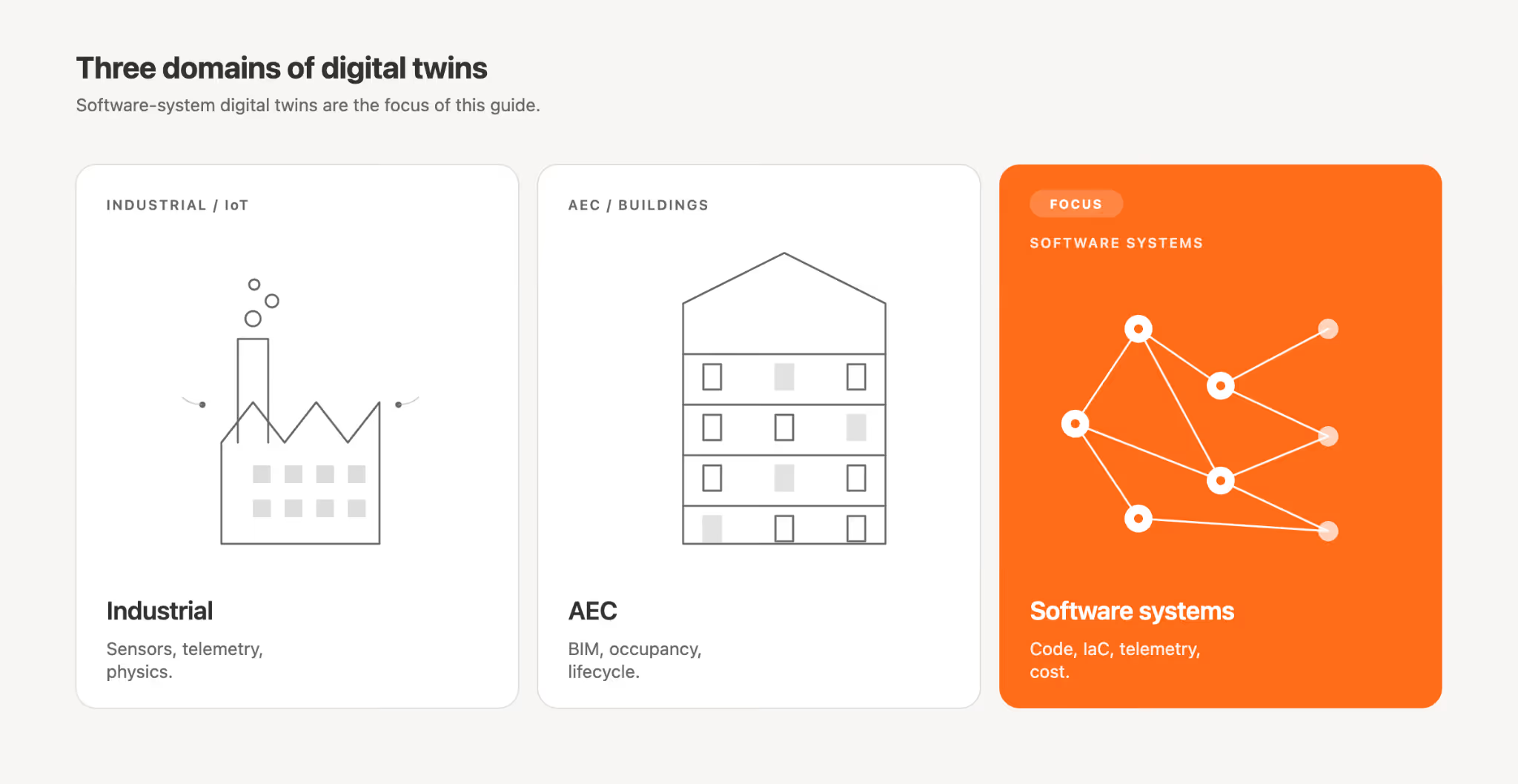
Three domains of digital twins. Software-system digital twins are the focus of this guide.
The Three Domains of Digital Twins (And Where Each Fits)
Digital twins are used across energy, healthcare, supply chain, and smart cities, but for software teams, the term usually shows up in three relevant domains. Conflating them is why most "digital twin architecture" content reads as if it were written for a different planet. The scaffolding is similar; the signals, fidelity, and decisions are not.
Industrial and IoT digital twins
The original. Digital twins of jet engines, wind turbines, and assembly lines built by the manufacturing industry and the automotive industry. Sensor data flows in from physical assets (temperature, vibration, pressure, RPM), maps onto a physics-based model, often coupled with machine learning, and drives predictive maintenance, throughput optimization, and what-if simulation across the asset's life cycle. ISO 23247 codifies a digital twin framework for manufacturing. Update frequency varies by use case, from sub-second control loops to slower maintenance cadences.
AEC and buildings digital twins
The architecture-engineering-construction interpretation is common in the construction industry and urban planning. Digital twins of buildings or campuses, anchored in a BIM digital model and enriched with occupancy, energy consumption, and lifecycle data. These virtual representations are digital replicas of physical sites that designers, owners, and operators can interrogate together. Autodesk and Matterport own most of the SERP visibility for this domain. The "architecture" here is the physical kind: walls, HVAC, structural load. If you searched "digital twin architecture" and landed on a page of building renderings, this is what the SERP defaulted to.
Software-system and enterprise digital twins
The category most enterprise software teams actually need, and the one the head SERP underserves. The twinned entity is a software system or an entire IT estate. The "sensors" are code repositories, infrastructure-as-code, CI/CD pipelines, observability telemetry, ticketing, and cost data. Gartner introduced a version in 2017, the Digital Twin of an Organization (DTO): "a dynamic software model of any organization that integrates operational and contextual data." The practical instantiation is a digital representation of your modern software system architecture, a graph-shaped digital twin model that stays current as code, infra, operational data, and intent evolve.
Core Components of a Digital Twin Architecture
Strip the marketing off any digital twin platform, and you find six components doing the work, useful for both vendor evaluation and understanding what a true digital twin of a software system requires.
Data ingestion. Connectors that pull from authoritative sources of truth. In manufacturing, IoT devices, sensors, and historians feed performance data and real-world data from the physical environment. In a software-system twin, input data comes from Git repos, Terraform state, the Kubernetes API, observability backends, and ticket systems. Without ingestion, the model is a snapshot.
Model representation. The structure the twin uses to organize what it knows. Manufacturing digital twins favors 3D geometry plus physics to mirror physical assets. Software-system digital twins favor graphs: services, repos, environments, dependencies, owners, and costs as typed nodes and edges. This graph-based digital twin model makes dependency-heavy architectural questions natural to query rather than merely visual to inspect.
Synchronization. The freshness contract. Sub-second for a turbine, near real-time for a software-system twin if you want it useful for incident response, and at minimum on-deploy for architectural decisions. Data processing happens continuously to keep the digital model aligned with reality.
Simulation and inference. The reasoning layer, where digital twins move from inventory to insight. Manufacturing digital twins simulates heat, stress, and flow inside a virtual environment. Software-system digital twins simulate change: "If we move this service to a different region, what happens to latency, cost, and blast radius?" A passive viewer can serve as a useful topology map, but it delivers less of the decision value teams expect from a true digital twin.
Query and visualization. How humans interact with the digital model: dashboards, diagrams, and increasingly natural-language interfaces. The diagram is table stakes; the query interface is where the leverage is.
Write-back and control. Optional in some domains, controversial in software. The twin can not just observe but act: opening pull requests, updating IaC, triggering Jira tickets, and feeding back into other systems the architecture team relies on. Most software-system digital twins start read-only and earn write access one workflow at a time.
Reference Architecture: How a Software-System Digital Twin Works
A software-system digital twin follows a five-layer reference architecture, borrowed almost directly from industrial digital twins, making the IoT prior art useful even when the entity is code rather than steel. The same data architecture maps cleanly: incoming data at the bottom, virtual representations in the middle, applications on top.
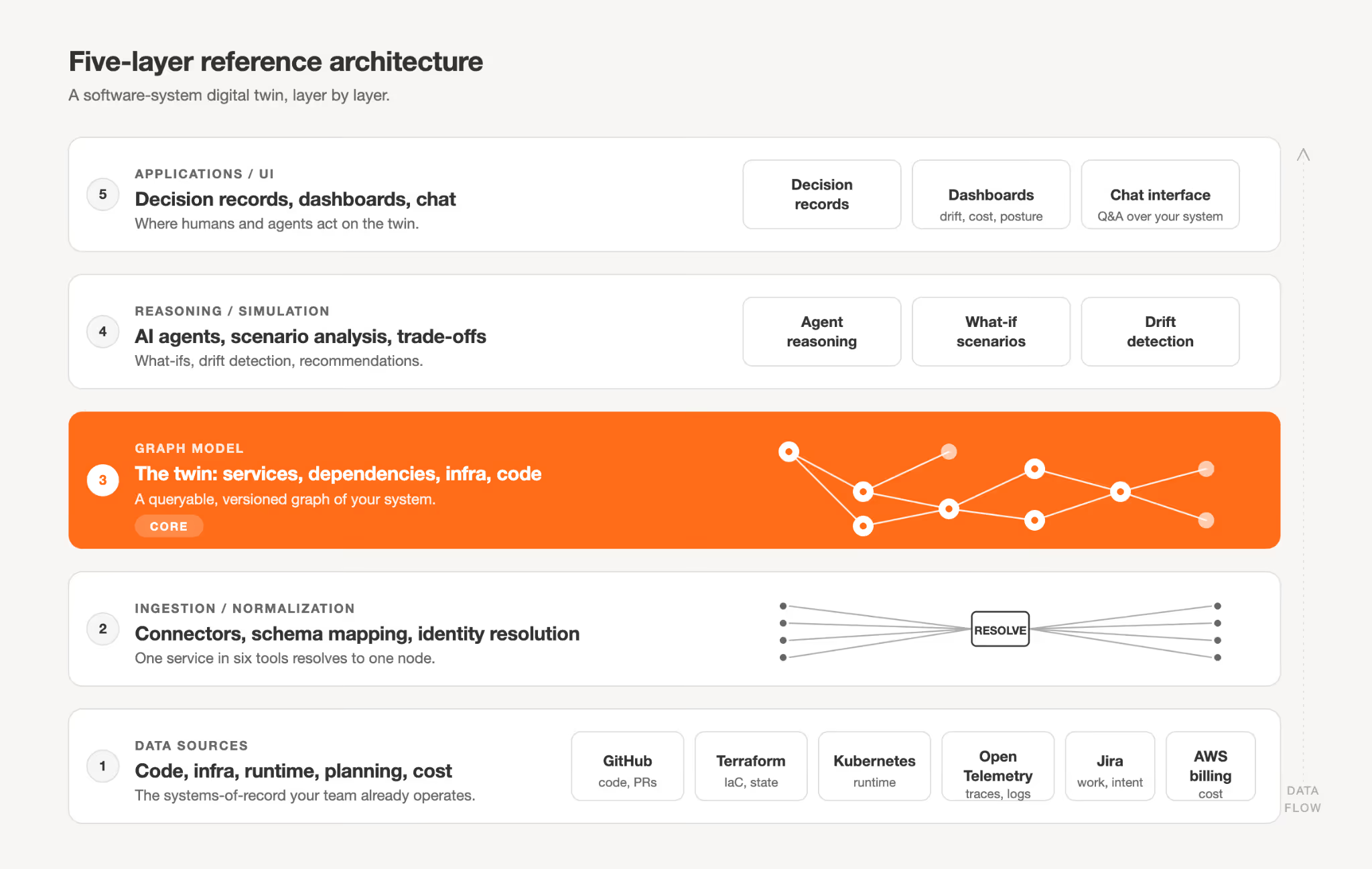
The five-layer reference architecture for a software-system digital twin.
Layer 1: Data sources. Code repositories (GitHub, GitLab, Bitbucket), IaC (Terraform, Pulumi, CloudFormation), CI/CD pipelines, runtime telemetry (OpenTelemetry, Prometheus, vendor APM), cost data, and the human-context layer (Jira, Linear, Confluence, ADRs). Each one is a partial truth; together they describe the system as it actually is.
Layer 2: Ingestion and normalization. Connectors pull from each source on a cadence, run data processing over the raw input to normalize it into a common schema, and resolve identity across systems. The hardest problem is reconciliation: the payments service in Git, the payments-prod cluster in Kubernetes, the payments cost tag in AWS, and the Payments team in Jira are the same logical thing. Many DIY attempts struggle at this layer.
Layer 3: Model and representation. A typed graph of services, components, environments, dependencies, contracts, costs, owners, and decisions. This is the digital twin proper, a virtual model and digital replica of how the system fits together. Catio's framing draws on graph theory and the digital twin of a tech stack: edges represent dependency, calls-into, deploys-to, and owns relationships, queryable both visually and programmatically.
Layer 4: Reasoning and simulation. The layer that does work, not just stores. Trade-off analysis, blast-radius reasoning, scenario modeling, and natural-language Q&A live here. A twin without this layer is a wiki with a better diagram.
Layer 5: Application and UI. Architecture decision records, modernization plans, cost dashboards, incident-response views, and a chat interface that lets engineers ask the twin questions in plain English.
If the model is only as fresh as the last quarterly audit, it is closer to documentation than a true digital twin. A useful twin enables monitoring of the system as it actually runs.
Why Software Architecture Digital Twins Are Emerging in 2026
For two decades, the case for an enterprise architecture twin existed but never closed. CMDBs filled the gap badly; hand-maintained diagrams filled it worse. Three things changed in the last 18 months that have made the category economically viable and pulled digital twins from a manufacturing-and-AEC curiosity into the broader digital transformation conversation.
AI broke the bottleneck on the wrong side. Coding assistants produce code faster than reviewers can evaluate its architectural implications. The cost is that 30-40% of engineering effort goes toward rework from drift and technical debt. When code velocity outstrips decision velocity, the cost of not having a live architecture model rises sharply.
Platform engineering normalized the "control plane" mental model. A decade of platform-as-a-product thinking trained engineering orgs to expect a single pane of glass over their infrastructure. The same pattern, applied one level up, gives a single pane of glass over architecture.
M&A, modernization, and cloud cost pressure created urgent demand. Architects integrating two stacks post-acquisition, CTOs planning a multi-year modernization, and FinOps teams attributing a cloud overrun to specific services all need the same thing: a live model that answers "what do we have, and what changes if we touch it?"
Use Cases for Digital Twin Architecture (in IT/Software)
A software-system digital twin earns its keep on a small number of high-leverage workflows. The pattern is consistent: a decision that used to take a week of cross-team archaeology becomes a query against real-time data from a live model.
Architecture decision support. Every new service or framework has trade-offs that teams normally surface in whiteboard sessions. A twin runs the trade-offs against actual constraints (dependencies, past decisions, ownership, cost envelope) so project teams can make informed decisions in hours, not weeks.
Modernization planning. Modernization initiatives historically begin with a six-week discovery phase that is mostly an audit. A live twin replaces the audit with a query and lets the planning conversation start from the current reality.
Dependency and blast-radius analysis. Before deprecating a service or splitting a monolith, you want to know what downstream cares. The twin's graph layer answers without requiring every team to file a manual impact report.
Cost optimization. Tying cost data to the architecture graph turns line-item cloud bills into something an architect can act on. A high-spend service becomes a sentence with an owner, a deployment history, and the dependencies that would feel the cut, thereby surfacing cost savings and supporting more efficient operations.
Compliance, audit, and M&A integration. Regulators ask which systems handle which data classes; the twin answers from data, not a spreadsheet updated for the last audit. The same data feeds system visibility and rationalization, and post-acquisition, the side-by-side comparison that neither side has documented becomes tractable.
Incident response. Real-time monitoring at 2 am, anchored in current dependencies, beats a year-old diagram every time.
Across all of these, digital twins replace an opinion or a stale document with a query against ground truth, giving teams real-time visibility into the parts of the system that matter most.
Building vs. Buying a Digital Twin Architecture
Every architecture team that gets serious about a software-system twin ends up at this fork. The failure mode for the DIY side is specific and worth naming.
Build. Three to five engineers spin up a graph database (Neo4j, Dgraph, NebulaGraph), wire connectors to GitHub, Terraform, Kubernetes, and observability backends, and ship an internal UI. It usually works for six months. Then connectors break, normalization debt compounds, the team gets pulled to higher-priority work, and the twin drifts back into a Confluence page with a fancier front end. The cost is not the build; it is the perpetual maintenance.
Buy. A category of products has emerged that acts as a data platform for the digital twin itself. ServiceNow has evolved its CMDB toward something twin-shaped. APM platforms have added topology features that approximate parts of a twin. Catio sits in the AI-native architecture-twin tier, with a graph-based data platform fed by code, IaC, observability, and cost signals.
The right software architecture tooling for any given org depends on which signals you most need synchronized and how much of the reasoning layer you want to own.
Common Challenges and Anti-patterns
Most failed digital twin projects, in any domain, fail for one of five reasons, and digital twin construction in software is no exception.
Stale digital twins. A model no one updates is worse than no model, because it gets consulted as if true. Synchronization cadence is the feature, not a "phase two."
Over-modeling. A digital twin that tries to represent every config flag becomes unusable. Model what you make decisions against. If the data does not change a decision, it does not belong in the twin.
Undefined fidelity expectations. "Accurate enough" depends on the question. Hourly-fresh is fine for modernization planning and useless for incident response. Naming fidelity per use case upfront avoids the "why isn't this real-time?" argument later.
Write-back risk. The moment digital twins can act, the blast radius of a model error includes production. Most credible architecture digital twins start read-only, expose dry-run modes, and earn write access workflow by workflow.
Siloed signal integration. Code lives in GitHub, infra in Terraform Cloud, telemetry in Datadog, cost in AWS billing, and tickets in Jira. Digital twins that integrate four of five can still be useful, but only if their blind spots are explicit. The integration matrix is the boring, expensive work that determines whether digital twins actually work.
How AI Reasoning Agents Change the Digital Twin Stack
This is where the category shifts from interesting to differentiated. Traditional digital twins in any domain have been passive viewers with a query API. You knew what to ask, and the twin answered faster than you could spelunk. AI reasoning agents change the contract.
Digital twins become conversational. Instead of clicking through a graph or writing Cypher, an architect asks: "What's the blast radius if we deprecate the v1 auth service?" or "Which services are over budget this quarter?" The twin answers in context, grounded in the architecture graph and the evidence connected to it. This is what Catio means when it positions Archie as a conversational architecture copilot: AI models in a multi-agent system that understand cost, performance, resilience, and security as first-class concerns.
Insights surface without exploration. Reasoning agents can run scheduled or event-driven checks against the twin, creating a tight feedback loop that proactively flags drift, risks, and opportunities. The architect's role shifts from "find the problem" to "decide on the surfaced problem," using signals from real-time data so teams can course-correct before issues hit the business.
Simulation moves from optional to expected. Generative planning lets the agent draft architecture options, identify gaps, and produce roadmap-ready suggestions against the twin. A trade-off table that once required cross-team discovery becomes a much faster starting draft, shaped by the same feedback loop.
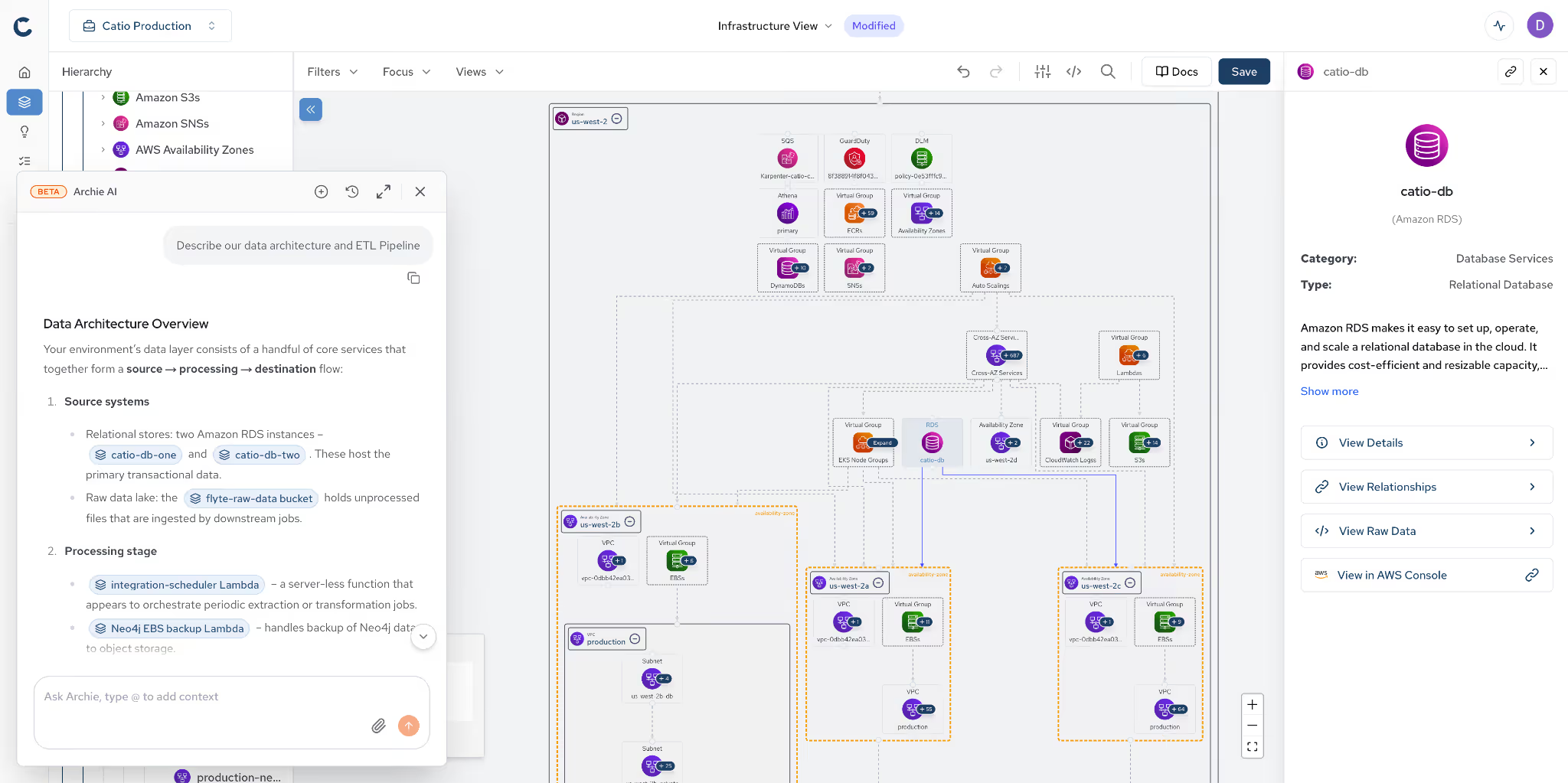
Archie answering a natural-language question against Catio's live tech-stack digital twin.
The unlock is the combination, and the failure modes for the two halves are mirror images: a queryable twin without AI is faster documentation, while AI without a grounded twin is confident hallucination. Together, they produce decision-grade output, which is what Catio's architecture-decision framework (Understand, Decide, Design, Execute, Compound) is built around.
Conclusion
Digital twin architecture is not just for factories and buildings. The fastest-growing category is software-system digital twins: live, queryable models of an organization's tech stack that replace stale diagrams with synchronized ground truth and turn architecture decisions from week-long discovery into queries against current reality. The reference architecture is consistent across domains; the signals and decisions are what change.
The category is pulled forward by AI-driven code velocity outpacing decision velocity, platform engineering normalizing the control-plane model, and the cost-modernization-M&A trifecta, making "we don't know what we have" an executive-level problem. AI reasoning agents turn a queryable twin from a passive viewer into an active collaborator.
See Catio's software system digital twin in action: book a demo to run it against your own stack.
Frequently Asked Questions
What are digital twins in architecture? In software architecture, a digital twin is a live, queryable digital representation of a software system: services, infrastructure, dependencies, costs, and decisions, kept in sync with production. It applies the digital twin pattern (ingest, model, synchronize, reason, surface) to a software system rather than physical assets or other physical counterparts.
What are the 4 types of digital twins? Practitioners typically split digital twins into four levels of maturity: a descriptive twin (static model), an informative twin (descriptive plus telemetry), a predictive twin (forecasts outcomes), and operational twins (act on the system via event-based flows). A software system twin usually starts descriptive and grows toward predictive and operational over time.
Is a digital twin the same as BIM? No. BIM is a model of how a building is designed; a digital twin reflects how a system actually runs, refreshed by real-time data. In software, the analog of BIM is a static architecture diagram, and the analog of a digital twin is a continuously synchronized graph fed by code, IaC, and observability signals.
Do you need IoT data for a digital twin? No. The Digital Twin Consortium's definition is domain-agnostic. Any system with authoritative data sources, a synchronized model, and a defined fidelity contract qualifies, including software systems with no physical sensors.
Is a CMDB a digital twin? Usually not on its own. CMDBs are inventory-first and often manually maintained. A digital twin needs a stronger freshness contract, a richer relationship model, and an analysis layer that can answer questions about change.
Share this Post